
DATE
May 29, 2026
Fake job offer emails are becoming more common — and more convincing. Cybercriminals often impersonate recruiters and well-known companies to steal personal information, financial details, or login credentials.
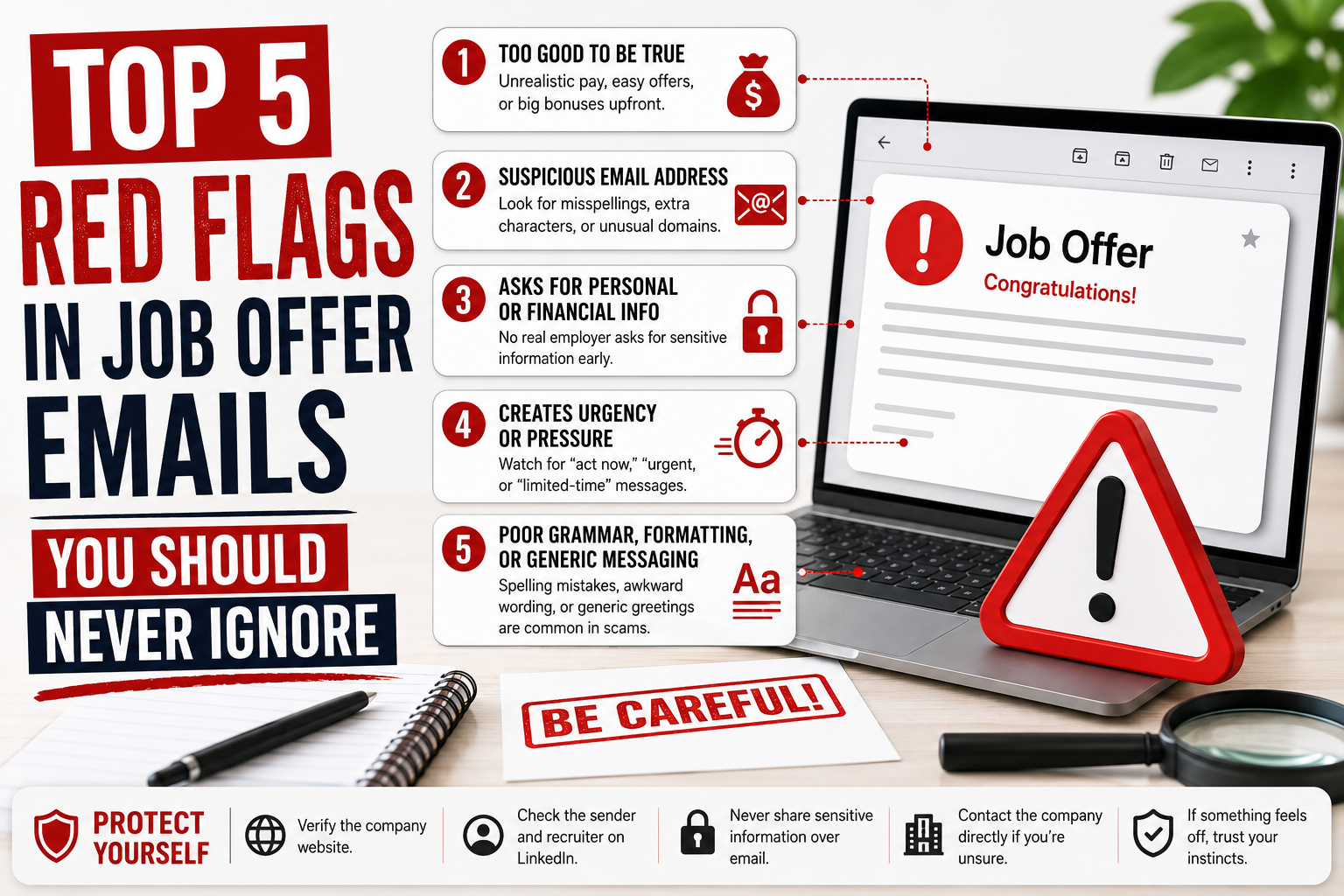
Before you respond to a job offer email, watch for these major warning signs.
If the salary is unusually high, the benefits seem unrealistic, or the company offers you a position without an interview, it’s a major red flag.
Scammers use exciting offers to pressure people into acting quickly without thinking critically.
Always inspect the sender’s email carefully.
Scammers often use domains that imitate legitimate companies but include small spelling changes or extra characters.
A legitimate company will usually email from its official domain.
No real employer should ask for sensitive information before a formal hiring process.
Be cautious if they request:
This is one of the most dangerous signs of a job scam.
Scammers want you to act fast before you notice the warning signs.
Phrases like:
are designed to pressure you into making rushed decisions.
Legitimate recruiters rarely use aggressive tactics.
Many fraudulent emails contain:
Professional companies usually send polished and personalized communication.
Before responding to any job offer email:
If something feels off, trust your instincts.
Job scams continue to evolve, but most fake job offer emails share the same warning signs. Taking a few minutes to verify an offer can help protect your identity, finances, and personal information.
When in doubt, slow down and verify before responding.
Know the risk.
Stop the threat.
Stay Protected.
© 2026 red sentinel IT - License
Powered byRed sentinel it
%20thumbnail.png)

